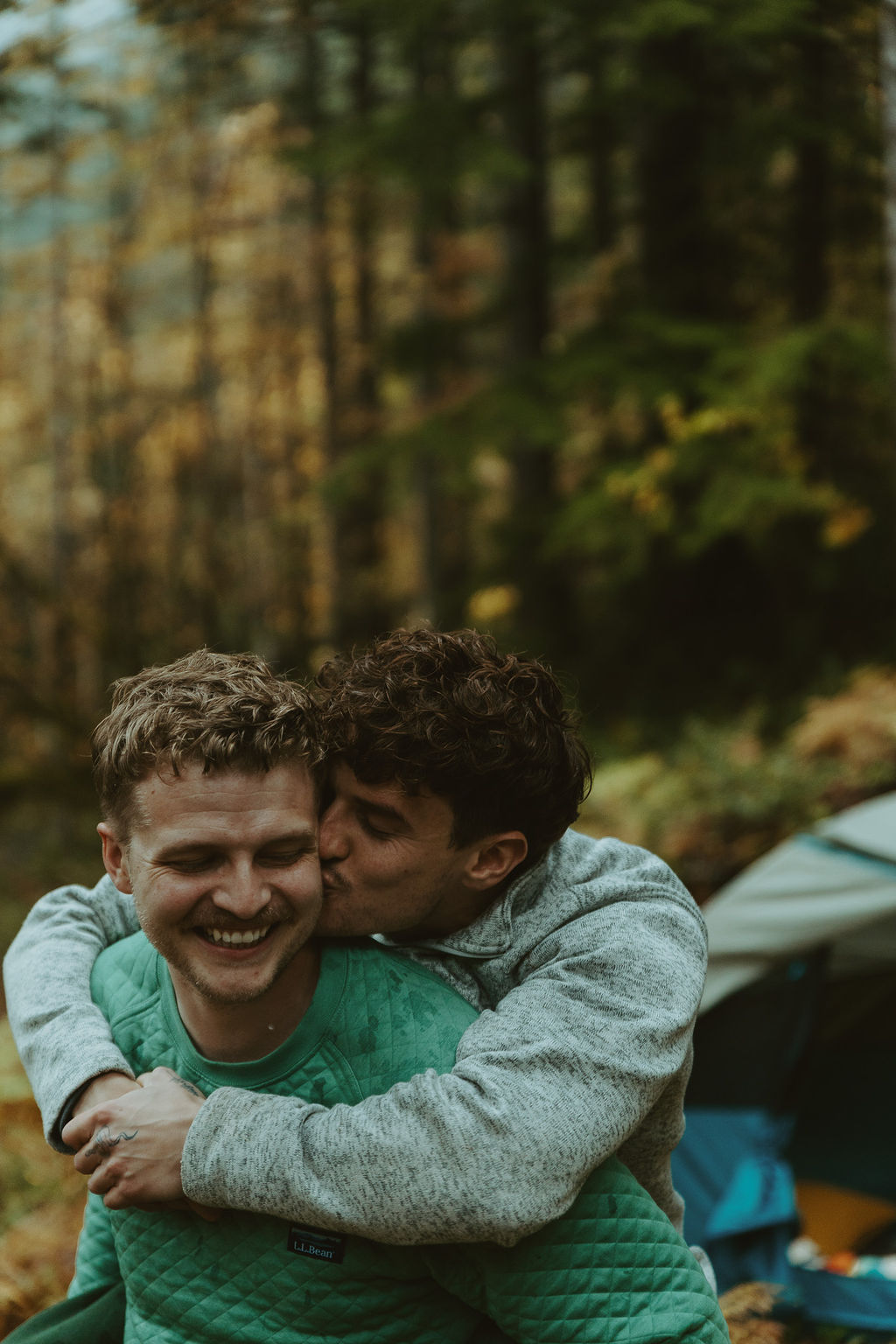
Recently there has been a shift in the world that has motivated my partner and I to make some big changes in relocating and essentially starting new lives somewhere else. Because of this I have been reflecting more on who I am, what I want in life, and how I can achieve that. This has brought about the familiar identity dysphoria as I convince myself that I don’t know who I am, or what I want out of life. I say familiar because this is something that I have discussed extensively with my therapist and partner. It feels like these discussions helps keep a crisis at bay, but do not completely quench the burning concern that I don’t know who I am.
Appeasing society.
Through counseling and self-reflection, I have been able to learn that much of my identity dysphoria stems from how I grew up.
Growing up as a closeted gay boy in a small, conservative Idaho town was a unique experience. The high school was small with a student population of 300. A third of the students (and town) were Mormon. Because of this, there wasn’t any privacy or space for being different.
I wore a mask. I was the “perfect” Mormon boy who respected women to a fault, attended church, and served in many leadership roles from age 12 to 18. I served the customary two-year mission in Missouri and “prayed the gay away” (spoiler, it didn’t work). Outside of church I did everything to appear more masculine including sports, dates with girls, hunting, and camping.
I did everything “right”.
This was my identity until I was 22. It was a constant internal struggle as I denied my authentic self, but I had an identity, a mask that I clung to.
Shedding the masks
When I met my partner 5 years ago, it exposed the skeleton of my true self that was hiding behind the mask. Not only did I struggle to come to terms with my sexuality and denounce a religious belief that I was taught my entire life, but I was also confronted with the realization that I didn’t know who I truly was.
Our weekends together at the beginning of our relationship revolved around activities classified as “masculine” by society’s standards: camping, hiking, backpacking, and shooting guns. Activities that if observed from the outside, would past as two straight friends just hanging out. That felt safe to me.
Over the past 5 years I have seen a gradual shedding of my past self as I learn to enjoy aspects of myself that I neglected or didn’t accept.
The guns turned into cameras as I embraced photography and the creativity that comes with it. We still love the outdoors but more as a pursuit rather than an escape. I progressively started doing more “feminine” hobbies of crocheting, reading, and sewing.
This process felt confusing and disorienting. I lost passion and desires that seem so constant in my life. I lost the desire to hunt, fish, and get dirty backpacking through the wilderness. It was difficult when friends or my father invited me to do these activities that I really did not care to do anymore. It would cause this cognitive dissonance that frustrated and confused me.
How is identity developed?
I don’t believe that my situation is unique or special. It is normal to change, outgrow old interests, and develop an identity over time. However, I feel that it is ideal that an individual is nurtured and able to be truly authentic throughout childhood leading to a strong foundation of “self” as they grow into adulthood. This creates a firm understanding of who they are, and they can simply grow and develop.
For me, it felt like my life from the ages of 8 to 22 was not mine at all. Erik Erikson’s Stages of Development identifies ages the of 12-18 stage of Identity vs. Confusion. This is where people develop their identity as we process personal experiences, personality, education, relationships and sexuality, and interests.
I suppressed my authentic self during this formative period.
“Did I really like camping or was it because boys my age liked it?”
“Do I really like photography or is it just a socially acceptable hobby?”
“Do I actually want to be a nurse or am I just seeking external validation?”
This is the cognitive dissonance I experience, the constant second guessing of every desire and every part of my identity.
Developing my authentic self.
It can be frustrating to be a 29-year-old perpetually trying to figure out who I am and what I want. Again, I don’t think this is a unique situation, many people have periods of identity crisis throughout their lives. I suppose I’m frustrated with the fact that I’m just now discovering things that I should have been able to enjoy my entire life.
This process has been more of a focus over the past year. I finished my master’s degree, got a dream job and finally had the time and energy to start slowing down and settling into myself. A self that I did not fully know. This past year has been a period of self-reflection on my intentions and motivations.
“Why do I want to buy a new camera lens? Is it a passion of mine, or is it marketing working on the consumer?”
“Do I want to go rock hounding with my mom because it’s an activity I enjoy, or do I go just to please my mother?”
“Am I going to the gym for me or because my partner is going?”
As I dissect every event, interest, and activities, I have progressively determined things that I am doing for myself. I reflect on how the activity made me feel. Am I feeling more energized and happier afterwards? Is this feeling from personal satisfaction or external validation? What was my motivation to do this?
This process has had unique results. As I try to define the box in my mind labeled “identity”, I have recognized the freedom that I have to be myself. I don’t always have to know who I am to enjoy a thing. I can do anything I want for the sake of myself and my joy. I don’t have to have a singular label that I present to the world for the world’s satisfaction.
I have come to terms that my identity is far too complex and interesting to boil down to simple, 2D terms and labels.
https://www.landonhawkins.com/
https://www.instagram.com/landonhawkinsphotos/
 Oram Outside
Leave a comment